
If you are researching a trip to Ninh Binh, you have already seen the picture. Someone is standing on a jagged limestone ridge, a carved stone dragon trailing behind them, looking down at a winding river flanked by golden rice fields. That is Mua Cave.
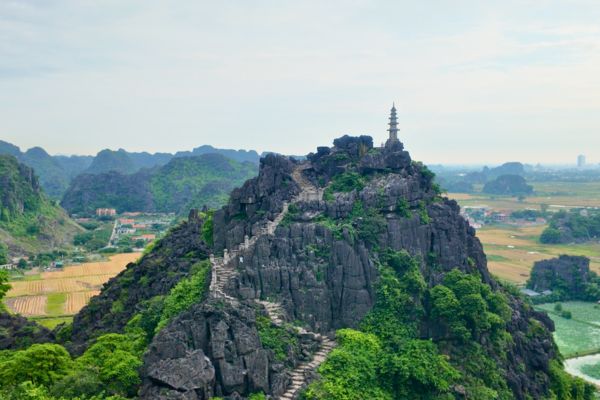
But as someone who has guided travelers up this very mountain for over a decade, I need to give it to you straight. The internet makes it look like a casual, breezy stroll for a photo op. It is not. Hiking Mua Cave is a steep, sweaty, thigh-burning climb up hundreds of uneven stone steps. The humidity will test you. Your knees will feel it. And yes, it is absolutely worth every single drop of sweat.
Forget the generic travel brochures. Here is the unvarnished truth, the practical logistics, and the local secrets you need to know before you tackle Mua Cave.
The Real History: Why is it called “Dancing Cave”?
Most visitors hike to the top, take their photos, and leave without ever knowing what they just climbed. “Mua Cave” literally translates to “Dancing Cave” (Hang Múa).
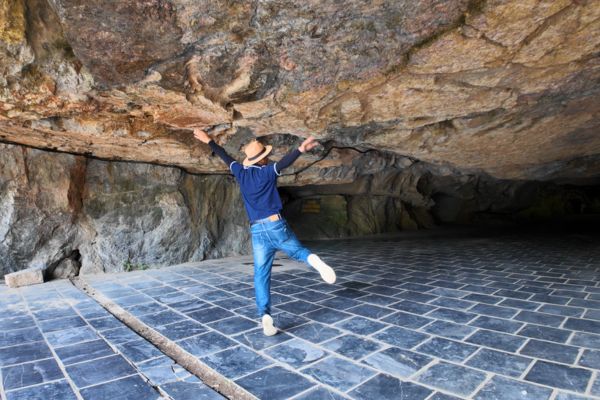
Back in the 13th century, during the Tran Dynasty, the capital of Vietnam was located right here in the Hoa Lu area. The nearby Thai Vi Temple was a significant royal site. According to historical records, King Tran Thai Tong used to come to this specific cave complex to watch imperial maids perform traditional singing and dancing.
You are not just climbing a random karst mountain; you are walking on historical grounds where ancient royalty used to retreat for entertainment. The actual cave where these performances took place is located at the bottom of the mountain – we will get to that later.
The Reality of the Climb: Step by Step
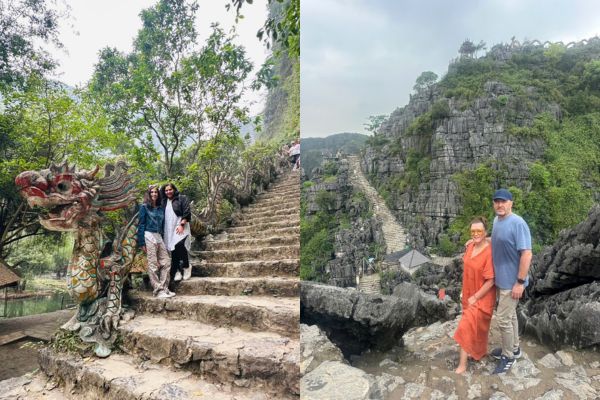
Let’s talk about the physical reality of the hike. The path to the summit of Mua Cave consists of 486 stone steps. They are carved directly into the limestone of Ngoa Long Mountain (Lying Dragon Mountain), zig-zagging their way up the cliff face.
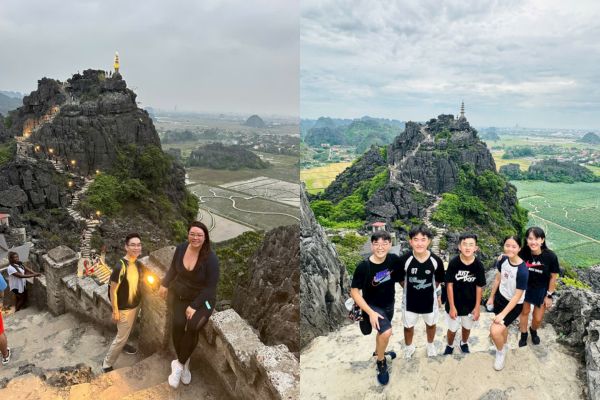
Here is what you need to prepare for:
The steps are not uniform: This is not a modern staircase. Some steps are shallow, while others require a high step-up. As you get closer to the top, they become steeper and more irregular.
The grip matters: Because thousands of people walk these steps daily, the limestone has become polished and smooth in certain sections. If it rains, or even if the morning dew is heavy, it gets slippery. Wear proper trainers or hiking shoes. Leave the flip-flops at your hotel.
The heat multiplier: Vietnam’s humidity changes the game. Even if the temperature says 28°C (82°F), the humidity will make it feel much hotter. There is very little shade on the upper half of the trail.
Take your time. There is no prize for reaching the top first. There are a few small landings where you can pull off to the side, catch your breath, and drink some water.
Navigating the Summit: The Fork in the Road
About two-thirds of the way up, the path splits into two directions. You can – and should – do both, but you need to know what you are looking at.
The Left Path (Ngoa Long Peak & The Stone Dragon)
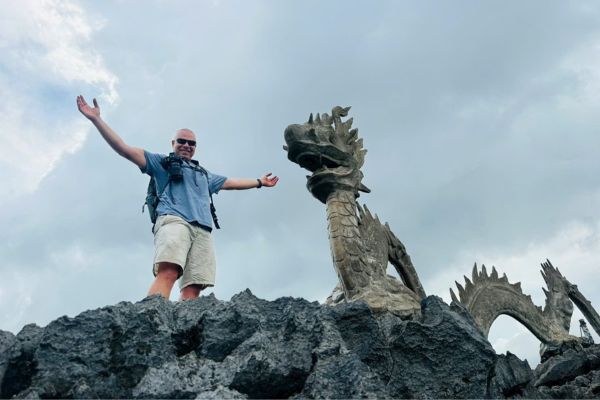
If you turn left at the fork, prepare your legs. This path leads to the highest point: Ngoa Long Peak (Lying Dragon Peak). This is where you will find the massive stone dragon winding its way along a very narrow, jagged ridge. Right alongside the dragon stands a serene statue of the Bodhisattva Avalokitesvara (Quan Am) looking out over the landscape. This is the spot that gives you the iconic, plunging view directly down into the Tam Coc valley and the snaking Ngo Dong River.
Local tip: I need to be brutally honest here – climbing around the dragon is dangerous. The limestone rocks are razor-sharp, the drops are steep, and there are no safety nets. Take your photos, but watch every single step you take.
The Right Path (The Iconic Tower)
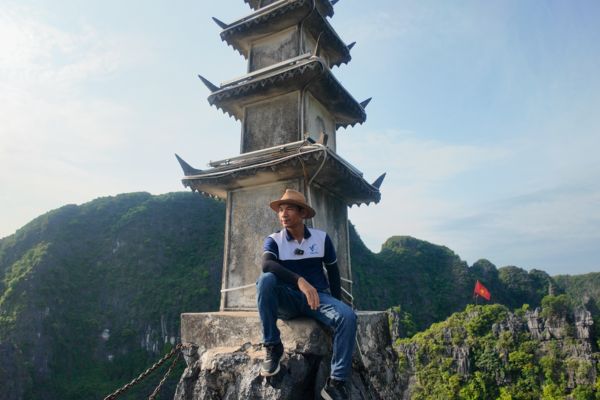
If you take the right path at the fork, you will climb to a slightly lower peak. This side is crowned by the famous, intricately carved stone stupa (tower) that you often see silhouetted against the sky in professional travel photos. While you don’t get the direct river view from here, this peak offers a breathtaking, sweeping vantage point of the vast, flat plains and the towering karst formations spreading out toward the horizon. It also tends to have a bit more breathing room than the dragon side.
Timing is Everything: When to Actually Hike Mua Cave
I cannot stress this enough: do not hike this mountain at noon. You will be miserable, the lighting for photos will be harsh, and the heat exhaustion is real.
The Best Times of Day
Sunrise (6:00 AM – 7:30 AM): This is the ultimate time to visit Mua Cave. The air is cool, the crowds are minimal, and watching the morning mist burn off the Ngo Dong River as the sun breaches the horizon is a memory you will keep forever.
Late Afternoon (4:00 PM – 5:30 PM): The temperatures start to drop, and you get that soft, golden-hour light hitting the limestone cliffs. It is perfect for photography, though it will be busier than the morning.
The Best Time of Year
While Mua Cave is open year-round, the landscape changes drastically. If you want to see the iconic bright yellow rice fields, you must time your visit for the harvest season. In Ninh Binh, this occurs between late May and early June. The contrast of the golden fields, the dark green river, and the grey limestone is unmatched. From February to April, the fields are lush, vibrant green. From July to October, the fields are often flooded and brown, though the surrounding mountains remain deeply green.
Beyond the Viewpoint: Do Not Miss the Bottom
Most people rush down the stairs and head straight for the exit. Slow down.
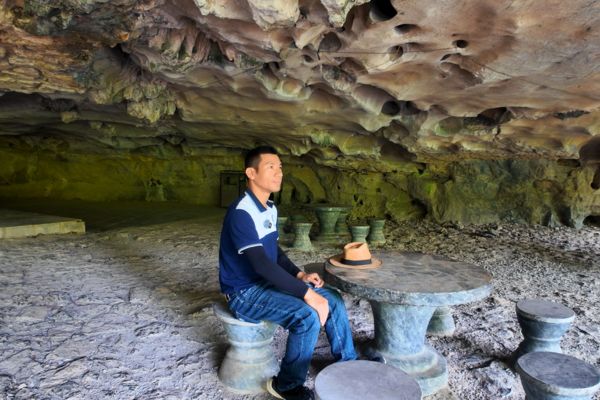
First, visit the actual “Mua Cave” at the base of the mountain. It is a relatively small, raw cave, but knowing its history as the King’s ancient theater gives it a quiet dignity.
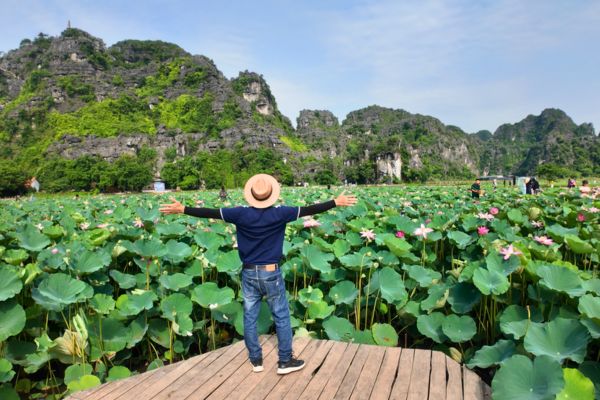
Second, if you are visiting between June and August, the entrance to the Mua Cave complex features one of the most spectacular lotus ponds in northern Vietnam. A wooden boardwalk winds directly through the middle of the massive lotus leaves and pink flowers. It is a stunning, peaceful walk to cool down after your hike.
Practical Tips from a Local
To make sure your visit goes smoothly, keep these practical rules in mind:
Hydration: Bring at least one large bottle of water per person. You will sweat more than you expect. There is a small shop at the bottom, but nothing once you start climbing.
Dress Code: While it is a hike, remember that there is a religious statue at the top (the Bodhisattva). It is always respectful to wear clothing that covers your shoulders and knees, though athletic wear is widely accepted due to the physical nature of the climb.
Location: Mua Cave is incredibly central. It is only about a 10-minute bicycle ride from the main Tam Coc town area. You do not need to book a massive, expensive tour just to get here if you are already staying in the valley. Rent a bicycle, pay the entrance fee at the gate, and walk in.
Frequently Asked Questions
How long does it take to hike Mua Cave?
For a person with average fitness, it takes about 15 to 25 minutes to reach the top. Plan to spend about 1.5 to 2 hours total at the site to hike up, take photos at both peaks, and walk back down safely.
Is it safe for children?
Yes, but with strict supervision. The steps are steep, and the top ridges do not have modern safety railings everywhere. If you have young children, you will need to hold their hands tightly, especially on the descent.
What should I combine it with?
Because Mua Cave requires physical exertion, I always recommend balancing your day. Do the hike early in the morning, grab some local lunch (try the famous Ninh Binh goat meat if you are adventurous), and spend your afternoon sitting back and relaxing on a sampan boat ride in nearby Tam Coc or Trang An.
Mua Cave is not a walk in the park, but it is the most honest, rewarding viewpoint in Ninh Binh. Put on your good shoes, bring some water, and take it one step at a time. The valley waiting for you at the top is worth the effort.