
Let’s be completely honest right from the start. If you are looking for a casual, paved walk through a manicured botanical garden, Cuc Phuong National Park is not for you.
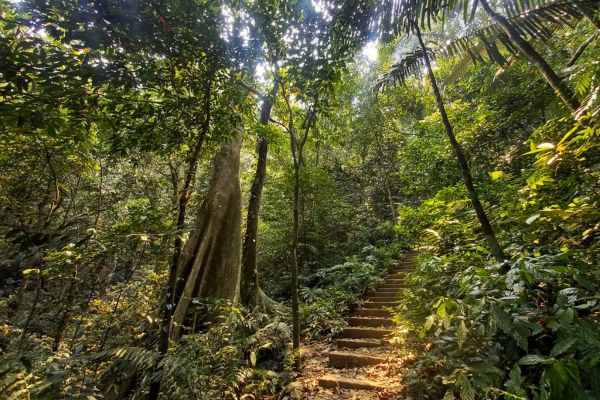
As a local guide who has sweated through these trails for years, I constantly see tourists arrive totally unprepared for the reality of a primary tropical rainforest. The brochures will sell you on “magical butterfly swarms” and “breathtaking ancient trees.” While those things exist, the brochures conveniently forget to mention the 95% humidity, the steep and slippery limestone trails, and the jungle leeches waiting in the underbrush after a rainstorm.
If you want the unvarnished truth about visiting Cuc Phuong National Park, you are in the right place. Here is the practical, no-nonsense guide to Vietnam’s oldest jungle.
What Actually Is Cuc Phuong National Park?
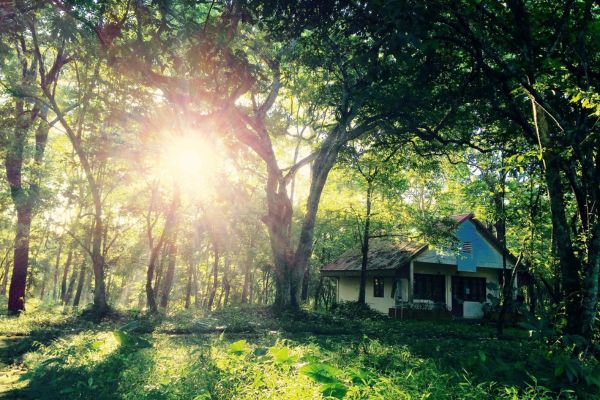
Established in 1962 by President Ho Chi Minh, Cuc Phuong National Park is the first and oldest national park in Vietnam. It covers over 200 square kilometers, acting as a massive green lung that borders three provinces: Ninh Binh, Hoa Binh, and Thanh Hoa.
This is a true primary rainforest. It is dense, it is loud with the sounds of cicadas, and the canopy is so thick in some places that the sunlight barely touches the forest floor. You are not coming here for a standard sightseeing tour; you are coming here to get dirty, sweat, and witness some of the most critical wildlife conservation work happening in Southeast Asia.
The Reality of the Rescue Centers (Do Not Skip These)
Most visitors head straight for the deep jungle treks, but the real heart of Cuc Phuong National Park lies right near the entrance gates.
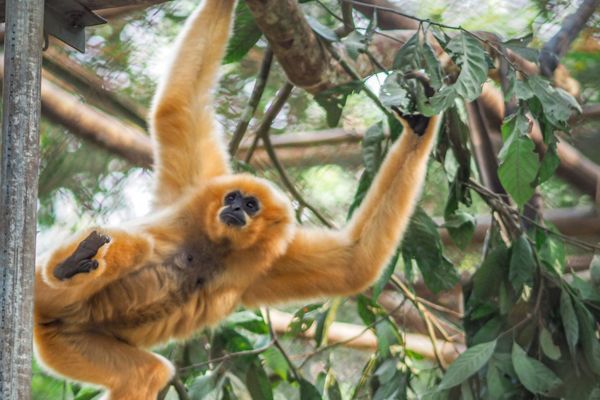
This park is home to the Endangered Primate Rescue Center (EPRC) and the Turtle Conservation Center. I need to make this very clear: this is not a zoo. You will not see animals performing tricks. These centers are rehabilitation facilities for animals rescued from the illegal wildlife trade and poachers.
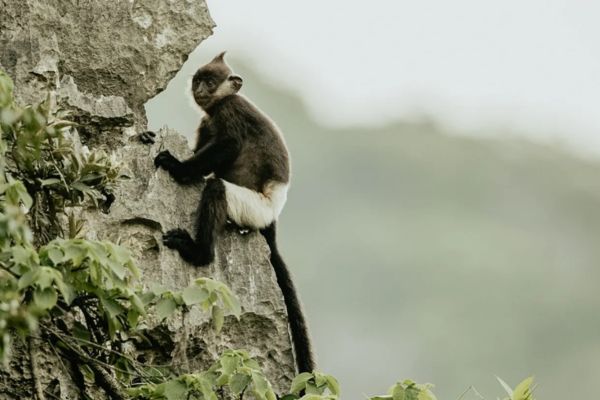
When you take the mandatory guided walk through the EPRC, you will see incredibly rare species like the Delacour’s langur (which is endemic to Vietnam) and various species of gibbons. The enclosures are massive, designed to mimic their natural habitat so they can eventually be released back into the wild. Listening to a gibbon sing its echoing, siren-like call through the morning mist is one of the most hauntingly beautiful experiences you can have in Ninh Binh.
The Jungle Trek: Hunting for the Millennium Tree
The main event for most hikers is the trek to the “1000-Year-Old Tree” (Cây Chò Chỉ). Let’s talk about the logistics of this hike.
First, you do not just walk from the entrance. The start of this trail is deep inside the park at the Macaque Center (Bong Center), which is a 20-kilometer drive from the main gate. Once you get there, the trail is a roughly 6-kilometer loop.
The hike is rated as moderate, but the Vietnamese humidity turns it into a serious workout. The path is a mix of uneven stone steps, massive exposed tree roots, and muddy patches. You will be hiking up and down steep limestone gradients.
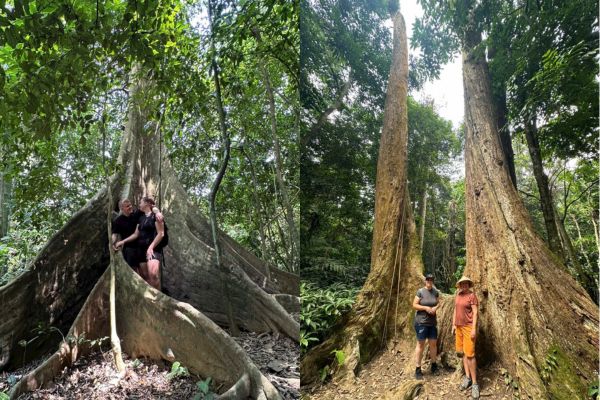
When you finally reach the massive Cho Chi tree, it is an incredibly humbling sight. Its root system is so large that a group of ten people could easily stand within the folds of the wood. However, the true reward is the hike itself – navigating the giant twisting vines, stepping over columns of marching jungle ants, and feeling entirely swallowed by the sheer scale of the rainforest.
The Cave of Prehistoric Man (Hang Nguoi Xua)
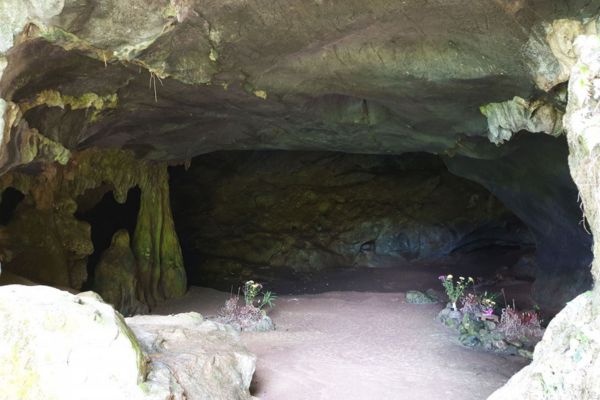
Located on the main road leading into the park center, this cave requires a short but steep climb up some metal stairs. In 1966, archaeologists discovered human graves and tools here dating back 7,500 years.
To be completely honest, inside, it is just a very dark, slightly damp cave that smells faintly of bat guano. There are no dramatic light shows or paved walkways like you might find in Phong Nha. However, standing in the pitch black and realizing that ancient hunter-gatherers used this exact limestone vault for shelter thousands of years ago gives the site a profound, heavy atmosphere. Bring a strong flashlight; your phone camera light will not be enough to pierce the darkness here.
The Butterfly Season: Myth vs. Reality
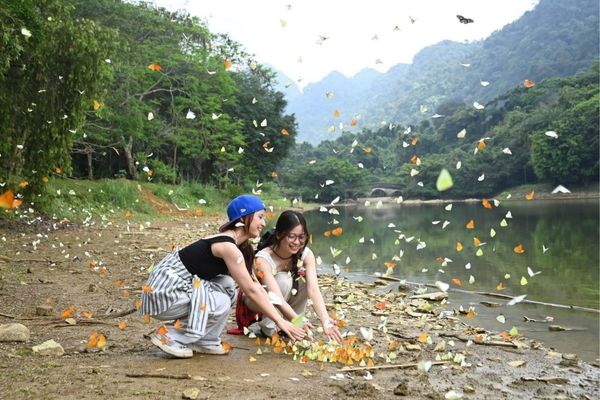
If you search for Cuc Phuong National Park on Instagram, you will see videos of people walking through literal clouds of butterflies.
Here is the truth: The famous butterfly season is real, but it is incredibly fleeting and dependent on specific conditions. It typically occurs from late April to mid-May. But here is the catch – the butterflies only swarm in massive numbers on sunny, warm days that immediately follow heavy rain. If you go on a cool, cloudy day, you might see a few dozen, but you will not get that viral “cloud” effect. If you happen to catch it on the right day, though, millions of white and yellow butterflies blanket the dirt roads and flutter around your ankles. It is spectacular, but requires a bit of luck.
The Leech Warning (How to Dress Properly)
I promised to keep it real, so we need to talk about jungle leeches (vắt). If you visit Cuc Phuong National Park during the rainy season (July to September), or even just after a heavy spring downpour, the leeches will be active in the leaf litter.
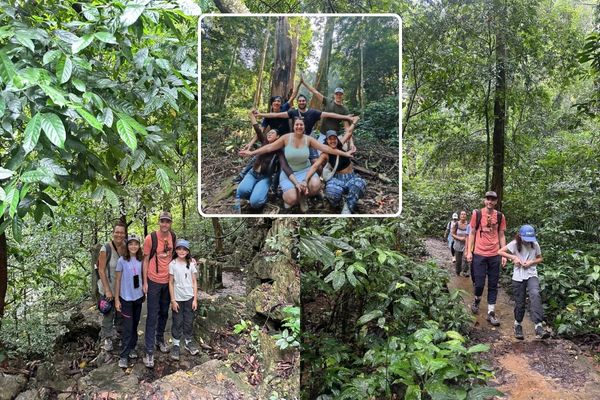
They are harmless and do not carry diseases, but nobody likes finding a bloodsucker on their ankle. Here is the local uniform for the deep jungle:
Proper hiking shoes: Absolutely no sandals.
Long socks: Pull your long socks up over the bottom of your trousers. It looks completely ridiculous, but it is the ultimate defense.
Insect Repellent: Spray DEET-based repellent generously around your ankles, shoes, and waistline.
Photography Tips in the Dense Canopy
Shooting in a primary rainforest is notoriously difficult. The canopy blocks a lot of the natural light, making the forest floor surprisingly dim even at noon. If you are bringing professional gear, you will need a fast lens (f/2.8 or wider) to keep your ISO manageable. If you are shooting video on a gimbal or a pocket camera, lower your frame rate to let more light into the sensor, and lean into the moody, high-contrast greens and deep shadows of the environment.
How to Plan Your Visit from Tam Coc
Because Cuc Phuong National Park is situated about 45 kilometers from the Tam Coc area, it will take you roughly 1.5 hours to drive there.
You can rent a scooter and drive yourself; the roads are generally flat and easy to navigate once you get on the main highway. However, after a sweaty, exhausting 3-hour jungle trek, riding a motorbike for another 90 minutes under the harsh afternoon sun is grueling.
For the best experience, I highly recommend booking a private car or joining a small-group excursion. At Tam Coc Boat Tours, we arrange daily trips to Cuc Phuong National Park that handle the transport, the entrance tickets, and provide an experienced local guide who actually knows how to spot the wildlife hidden in the dense foliage.
Visiting Cuc Phuong National Park is an unfiltered dive into Vietnam’s wild heart. It is sweaty, it is raw, and it demands physical effort. But if you respect the jungle and come prepared, it will be one of the most rewarding days of your entire trip.